

Ganita, located on Trabzon's coastline, is not just a coastal development; it is also an important place reflecting the historical continuity of the city. Used as a port, trading point, and social gathering place since ancient times, this area has borne the traces of different civilizations over time. Although it is now organized as a modern coastal living space, it has a strong history stretching from the Roman period to the Ottoman era.
An examination of Ganita's development reveals its direct connection to the history of Trabzon . The city's relationship with the sea, its function as a port, and its coastal settlements can be understood through Ganita. This region holds a central position in Trabzon's collective memory in terms of military, commercial, and social aspects.
Origin and Meaning of the Name: What Does Ganita Mean?
There are differing opinions on the origin of the name Ganita. Some studies suggest it may be of Ancient Greek origin, while other sources claim it originated from a local dialect. Since Trabzon has been influenced by various cultures throughout its history, this diversity is reflected in its naming conventions. There are also opinions suggesting similarities to port names used during the Roman and Byzantine periods.
ConsideringTrabzon's geographical features, the fact that Ganita has a natural bay structure suggests that the name may have a meaning connected to a harbor or coastline. The use of Ganita as a place name associated with the sea among the locals also supports this view. The region retained its name and continued in local usage even after it came under Ottoman rule following the conquest of Trabzon .
The word Ganita has become a symbol synonymous with Trabzon's coastal identity today. This name is not only a place name but also a cultural reference ingrained in the city's memory.
Where is Ganita? Its strategic location on the Trabzon coastline.
Ganita is located in the Ortahisar district of Trabzon, on the coastline between Faroz and the city center. Thanks to its natural bay structure, it has historically held an advantageous position for maritime transport. Because Trabzon has a narrow coastline due to its geographical features, such natural harbor areas are of strategic importance.
The region's location is advantageous in terms of maritime trade routes. Situated on the eastern coast of the Black Sea, Trabzon has historically been one of the transit points between the Caucasus and Anatolia. In this context, Ganita, with its port function, was used for trade and military shipments.
Throughout Trabzon's history, coastal regions have been of great importance in terms of defense and trade. Coastal control was a strategic issue, especially before and after the conquest of Trabzon. Ganita's proximity to the city center made it advantageous in terms of both transportation and social use.
The Ancient History of Ganita: The Roman Empire and its Port Identity
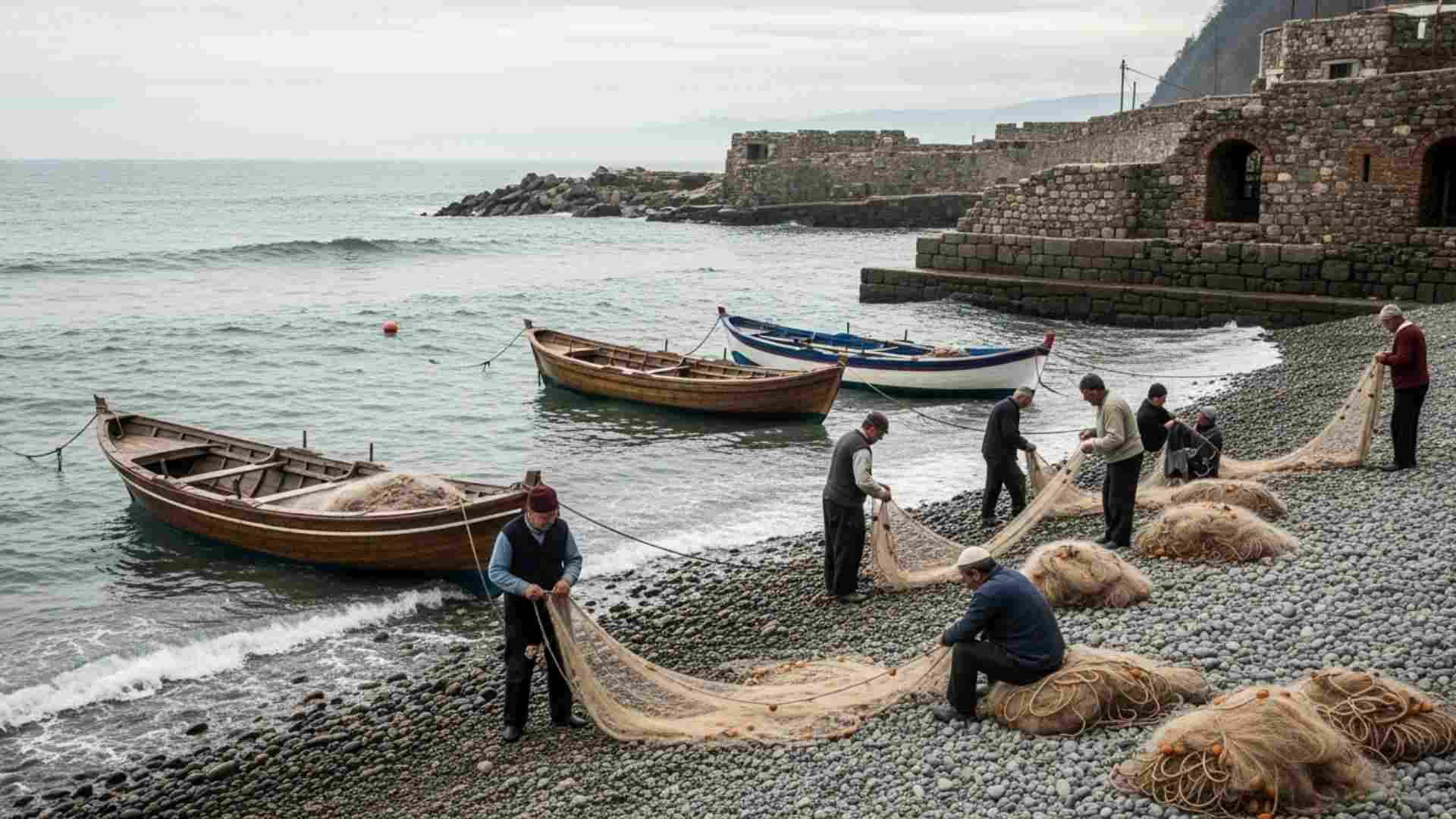
In ancient times, Trabzon was one of the important points of the Roman Empire on the Black Sea coast. During the Roman period, the city was used as a military and commercial base. The Ganita region was also actively utilized during this period due to its natural harbor features.
Trabzon, an important stop on the Black Sea trade network during the Roman Empire, served as a bridge between East and West. The harbor structures in Ganita allowed ships to dock and unload cargo. Archaeological evidence indicates that the region was heavily used in antiquity.
During this period, the port was used not only for commercial purposes but also for military shipments. Trabzon was important in terms of the mobility of Roman legions along the Black Sea route. Ganita was considered part of this military network.
The Role of Ganita in the Byzantine and Ottoman Periods
Ganita continued to function as a port during the Byzantine period, following the Roman era. Trabzon became the capital of the Trebizond Empire in the 13th century, and maritime trade maintained its importance. During this period, the Ganita coastline was used as one of the centers of commercial activity.
Following the conquest of Trabzon in 1461, the city came under Ottoman rule, and control of the coastal areas was reorganized. During the Ottoman period, Ganita was important for fishing activities and small-scale maritime trade. Although the harbor structure changed over time, the region maintained its connection to the sea.
Records in the Ottoman archives concerning the port of Trabzon demonstrate the continuity of coastal use. Ganita has been an active area both economically and socially throughout this period.
Ganita in the Republican Era: A Center of Social Life and Urban Memory
During the Republican era, Ganita stood out not only as a port but also as a social hub. Its seaside tea gardens, walking areas, and meeting points became an integral part of the daily lives of the people of Trabzon.
Ganita holds a special place in the city's memory. Its location, being one of the areas where the city meets the sea, makes it symbolic. Especially because it's one of the first places to see the sunrise, the area is considered a place of great significance by the locals.
In terms of urban identity, Ganita serves as a bridge between Trabzon's past and present. Formerly used as a port, the area has become a social and cultural center in the modern era.
How is the Ganita area used today?

Today, Ganita is used as a modern coastal living area following extensive coastal development. With walkways, resting areas, and landscaping, it is open to both locals and visitors.
The area is a popular choice for photography and social events. The sea views and open-air design make Ganita a breath of fresh air within the city. Additionally, the surrounding cafes and resting areas contribute to a vibrant social life.
Ganita's current use is an example of historical identity merging with modern urban planning principles. Its continuous use from antiquity to the present demonstrates that the area is not merely a coastal strip, but a part of Trabzon's cultural heritage.


Comments
Write the first comment.