

When Trabzon is mentioned, the sea, historical buildings, and old neighborhoods spread across the hillsides usually come to mind. However, in recent years, stories about what lies beneath the city have become one of the most intriguing topics. Certain structures unearthed, particularly in Ortahisar, have raised the question of whether Trabzon has an underground city. This question is not based solely on hearsay; it has become a matter that deserves serious consideration, taking into account the city's history and settlement patterns.
Ortahisar is a region that has been considered the heart of Trabzon for centuries. Bearing the traces of different civilizations layered upon each other, this area naturally has traces both above and below ground. When examining Trabzon's history , it is not surprising that needs such as defense, shelter, and transportation were gradually moved underground. However, this does not mean that every underground structure can be directly defined as an underground city.
Has an Underground City Been Discovered in Trabzon? Official Statements and Confirmed Findings.
The most accurate answer to the question of whether an underground city has been found in Trabzon is that, for now, there is no confirmed underground city. While the existence of the structures that have been discovered is undeniable, whether these structures scientifically qualify as an underground city is still under investigation.
The concept of an underground city is not applied only to areas consisting of a few tunnels or voids. Such structures typically include rooms, water sources, ventilation systems, and planned passageways that allow for long-term habitation. However, the underground structures unearthed in Trabzon to date comprise more limited areas and do not yet reveal this holistic structure.
Therefore, a cautious approach is adopted in assessments of this subject. The existence of underground structures is important and valuable, but definitively defining them as underground cities would be a premature scientific interpretation. Understanding this distinction is crucial for a sound assessment of the issue.
Are the structures that have been uncovered an underground city or a network of passageways and tunnels?
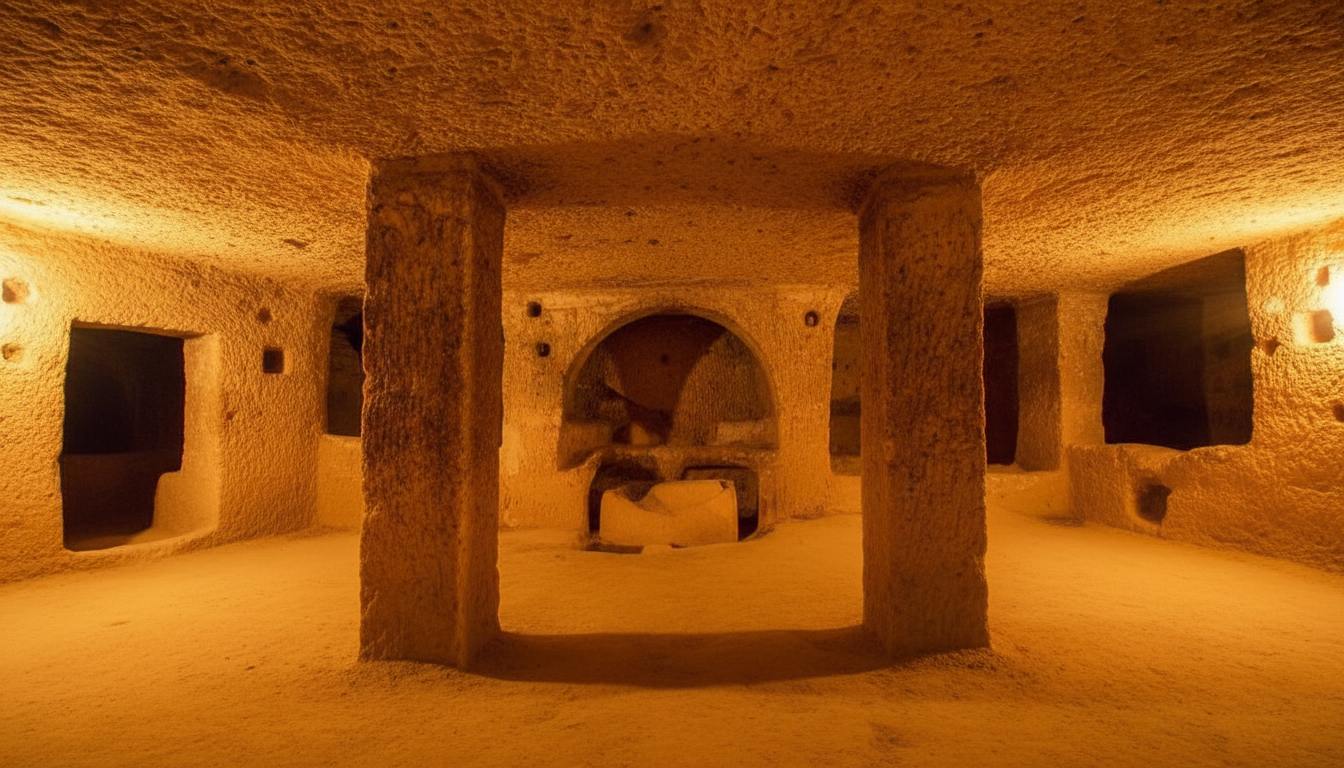
Most of the structures identified in Ortahisar are considered to be a network of passageways and tunnels rather than an underground city. Passages are narrow and long underground passages that have been used throughout history, especially for security and defense purposes. The existence of such structures is considered quite natural for a city located in a strategic position like Trabzon.
Some of these tunnels may have connected specific structures, while others were designed as secret passages leading to the outside. These structures, particularly common around castles and ancient settlements, may have been used to provide safe movement in times of sudden danger.
The term "underground city" describes a much more comprehensive structure. An underground city contains organized spaces that allow people to live there for extended periods. The structures unearthed in Trabzon do not appear to be on this scale. Therefore, the description of a network of passageways and tunnels seems more accurate and descriptive for the current findings.
How Strong is the Claim to the Komnenos Kingdom? Historical Data and Academic Approaches
One of the most frequently cited claims regarding the underground structures is that they date back to the Komnenos Kingdom period. During this era, known as the Empire of Trebizond , the city experienced a period of considerable political and military activity. Therefore, it is not unreasonable to assume that these underground structures were used for defensive purposes during this time.
However, identifying a structure as belonging to a specific period cannot be done solely through historical estimates. The construction techniques, the stones and materials used, the excavation layers, and written sources must all be considered together. While the data obtained to date show that some structures bear similarities to medieval architecture, it does not make it possible to assign a precise date.
Academic approaches reveal that these structures do not belong to a single period, but were built and used in different periods and underwent changes over time. Therefore, while the possibility of the Komnenos Kingdom cannot be completely ruled out, it is not considered a sufficient explanation on its own.
To which periods might the underground structures beneath Ortahisar belong?
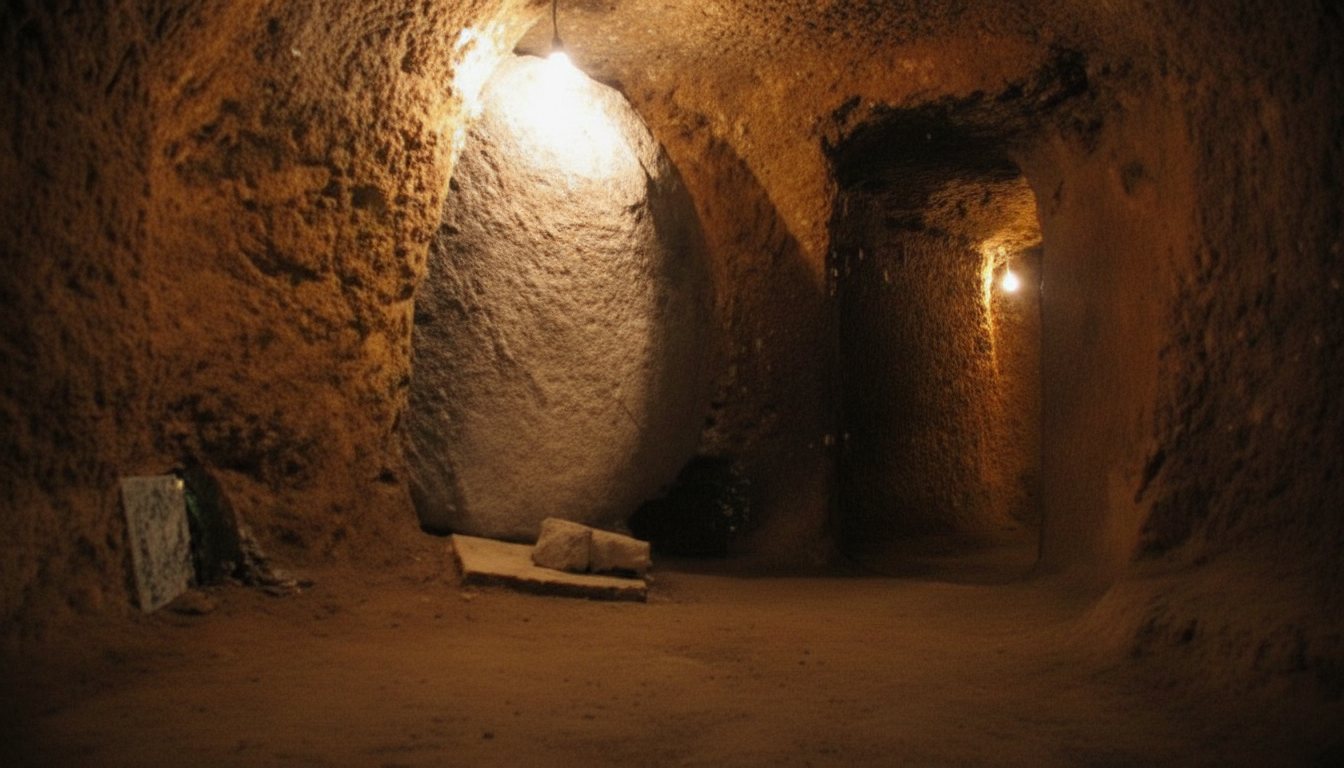
Ortahisar is a region that has been continuously settled since antiquity. This suggests that the underground structures may not be products of a single period, but rather may have taken shape in different eras. It is believed that some structures bear traces dating back to the Roman period, and were reorganized for defensive purposes during the Byzantine period.
It is believed that during the Ottoman period, these types of structures were not completely abandoned, but continued to be used for functions such as storage or shelter. The commercial and military importance of the city may have ensured that the underground areas remained functional.
This multi-layered use demonstrates that the structures beneath Ortahisar were not built according to a single plan, but rather shaped by needs over centuries. From this perspective, the underground structures can be considered silent witnesses to Trabzon's long historical process.
Why haven't the underground structures in Trabzon been brought to light until now?
One of the main reasons why the underground structures in Trabzon have not been widely known until now is the dense population of Ortahisar. Excavating in areas containing historical structures is both difficult and risky. For this reason, studies on underground areas have been limited for many years.
Over time, some of these structures have been filled with soil, collapsed, or had new buildings constructed on top of them. This has made it difficult to detect the underground areas. Furthermore, the lack of systematic and comprehensive archaeological studies of these structures in the past has also delayed the discovery process.
Thanks to increased restoration and conservation efforts in recent years, underground structures have begun to become more visible. However, this process needs to proceed carefully and with scientific methods. A patient and accurate research process will help clarify the questions surrounding Trabzon's underground.


Comments
Write the first comment.