

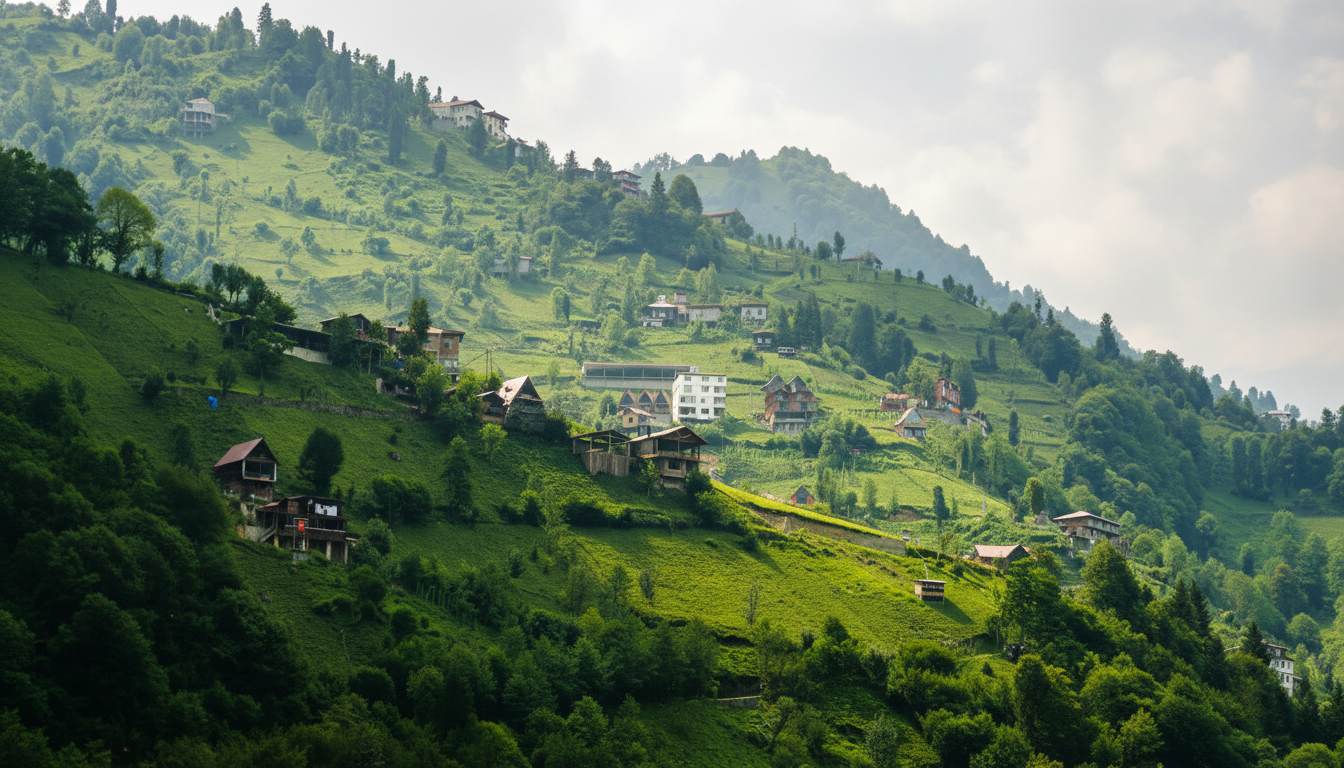
One of the most striking architectural features when examining houses in Trabzon is the steep, high-pitched roof design. This preference is not an aesthetic preference, but a direct result of environmental conditions. ConsideringTrabzon's geographical features, it is seen that a large part of the city is built on sloping terrain, valleys, and hillside settlements. This topography necessitates the rapid drainage of rainwater and requires a high slope in roof design.
Similarly, Trabzon's climate, with its heavy rainfall throughout the year, high humidity, and seasonal snowfall, directly influences building design. Prolonged rain and humidity make water accumulation on the roof surface risky. A steep roof system allows water to drain away without accumulating on the surface, protecting the load-bearing system and extending the lifespan of the building. Therefore, having steep roofs on houses in Trabzon is not a preference, but a technical solution adapted to the climate and terrain conditions.
How does the Black Sea climate affect roof slope in Trabzon?
Trabzon's annual rainfall is above the Turkish average, and the rain is distributed throughout the year, not seasonally. Prolonged and uninterrupted rain increases the risk of water accumulation on the roof surface. As the roof slope increases, the time water remains on the surface decreases. This both extends the life of the roofing material and reduces the risk of leaks.
The high humidity in the region also affects roof design. Humid air increases the risk of decay, especially in wooden structural elements. Steep roofs facilitate air circulation in the attic space. This prevents moisture from becoming trapped inside the building. Since traditional Trabzon houses are generally built with a wooden frame system, this ventilation feature is critically important for the durability of the structure.
Wind effects should also be considered. Strong winds are sometimes experienced along the Black Sea coast. Sloping roofs distribute the pressure created by the wind, reducing damage to the roof surface. Therefore, roof slope is related not only to rainfall but also to wind load.
How do snow load and continuous rainfall determine the roof angle?
Although snowfall is limited in the coastal areas of Trabzon, significant snow accumulation can be observed in the higher neighborhoods and inland areas of the city center. Snow creates an additional static load on the roof. If the roof slope is low, the snow remains on the surface for a long time, increasing the pressure on the supporting structure. Steep roofs, on the other hand, allow the snow to slide down to the ground. This increases the safety of the structure.
The following technical factors are taken into consideration when determining the roof angle:
- The average snow depth in the region
- Annual rainfall duration and intensity
- The slipperiness property of the roofing material.
- Load-carrying capacity of the carrier system
Trabzon houses were built in the past without engineering calculations. However, thanks to years of experience, craftsmen applied the correct slope. This demonstrates the ability of traditional architecture to adapt to environmental conditions.
In regions with frequent rainfall, the roof surface needs to drain water quickly. If water cannot be drained, moisture accumulates under the roof covering and eventually seeps into the interior of the building. This can cause damage, especially at the junctions of wood and stone. A steep roof significantly reduces this risk.
Do Sloping Terrain and Landslide Risk Play a Role in Roof Design?
Most of Trabzon's residential areas are located on sloping terrain. This geographical structure causes rainwater to quickly turn into surface runoff. If building design does not ensure controlled drainage of water, soil saturation increases around the foundation, raising the risk of landslides.
The steep roof system helps to quickly drain water from the structure. Thanks to the wide eaves, rainwater does not directly contact the wall surface. This detail plays an important role in protecting the facades. It also prevents water from accumulating around the foundation.
Houses in Trabzon are generally built on stone foundations. The stone foundation limits moisture coming from the ground, while the roof slope controls water coming from above. These two systems work together to ensure the longevity of the structure. This holistic approach is vital in sloping terrain conditions.
Topography also influences building orientation. The roof slope is often positioned according to the prevailing wind direction. This prevents wind from entering under the roof and creating lift.
How was the roof system constructed in traditional Trabzon houses?
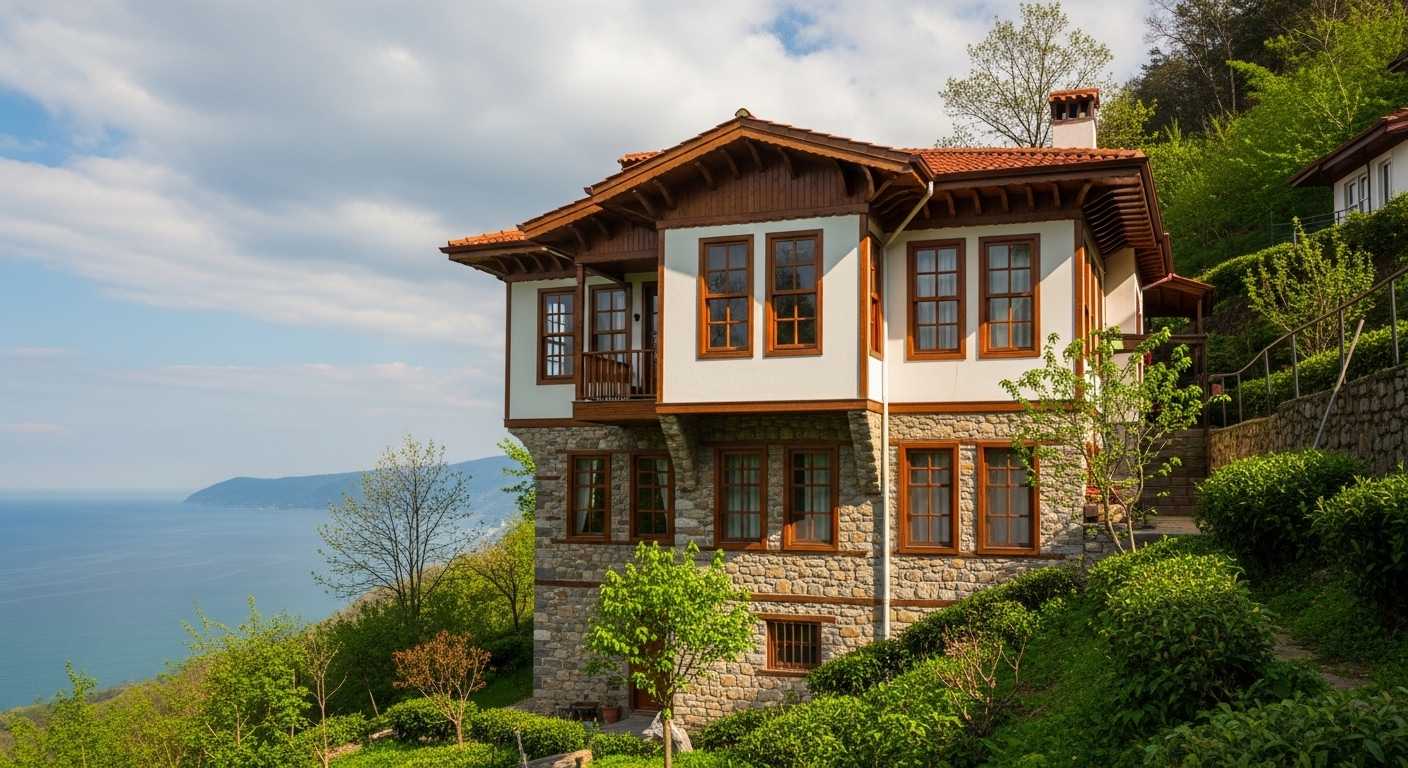
In traditional Trabzon houses, the roof support system consists of wooden trusses. The truss system distributes the load evenly to the walls. The steeper slope ensures more stable operation of the wooden truss system. Roof coverings typically consisted of shingles or tiles.
Hartama is a type of roofing system made of thin wooden planks unique to the region. This system requires a specific slope to prevent water from accumulating on the surface. If the slope is too low, the hartama can leak water. Therefore, traditional craftsmen kept the roof slope high.
Roof eaves are generally designed to be wide. This design protects the facade from rain and extends the lifespan of the walls. At the same time, the attic space allows for air circulation, preventing moisture from accumulating inside the building. The attic is also often used as storage space.
What do the roofs of houses in Trabzon look like today?
Despite advancements in modern building technologies, the tradition of pitched roofs persists in Trabzon. Even in reinforced concrete structures, pitched roofs are preferred. The main reason for this is the unchanging climate conditions. Heavy rainfall and high humidity make flat roof applications risky.
Today, roof coverings include tiles, metal panels, and waterproofing systems. Insulation materials are placed in the attic for thermal insulation. However, the principle of roof slope is preserved. This demonstrates the continuation of regional architectural identity.
While aesthetic considerations play a role in newly constructed housing projects, roof slope is mostly determined by technical necessities. Trabzon houses today are still built in harmony with their surrounding environment. The steep roof form is a rational solution integrated with the region's climate, geography, and architectural culture.
In conclusion, the steep roofs of houses in Trabzon are not due to a single reason. Heavy rainfall, snow load, high humidity, sloping terrain, and traditional construction techniques must be considered together. Trabzon houses are a concrete example of architectural heritage adapted to these conditions. Therefore, the steep roof is not a choice, but a natural consequence of environmental necessity.


Comments
Write the first comment.