

In Trabzon, the way people address each other is more than just a simple communication language composed of words. These forms of address are a powerful cultural indicator reflecting the region's social structure, daily life habits, and the naturalness of human relationships. While the greetings used in daily life in Trabzon may sometimes seem harsh or loud from an outsider's perspective, this is often a natural result of sincerity and warmth.
For the people of Trabzon , communication is direct and rapid rather than distant and indirect. Emotions are often expressed unfiltered. Therefore, forms of address gain meaning more from tone, context, and level of relationship than from the content of the speech itself. The greetings used in the street, market, neighborhood, or within the family clearly reveal the strength of the social bonds of the people of Trabzon.
The Most Commonly Heard Terms and Meanings from Trabzon in Daily Life
The forms of address used in daily life in Trabzon directly reflect the communication style of the people of the region. These words are generally short, emphatic, and direct; however, their true meaning is determined by the context and intonation in which they are spoken.
"Uşağum " is one of the most frequently heard terms of endearment in Trabzon. This word isn't only used to address someone younger than you. It expresses closeness, possessiveness, and sincerity towards those you are close to. It often carries a protective and friendly connotation.
"Gidi" is generally used to express mild reproach or surprise. Although it may sound harsh, it is usually not offensive. In everyday conversation, it is said jokingly or to highlight a behavior the other person has exhibited.
"Ula" is one of the forms of address associated with the people of Trabzon. It is used to attract attention at the beginning of a conversation, to involve the other person in the conversation, or to increase emphasis. Depending on the intonation, it can take on a friendly meaning or a warning.
This is used to show that you understand, agree with, or accept what is being said. Often, it indicates that you are listening without interrupting and makes the other person feel that the communication is ongoing.
The common feature of these forms of address is that words alone are insufficient. In Trabzon, the meaning of a word is shaped more by the emotion of the moment it is spoken than by the context in which it appears. Therefore, to correctly understand these conversations, it is necessary to focus not only on the words but also on the entirety of the speech and its tone.
Forms of Address Vary According to Kinship, Age, and Intimacy
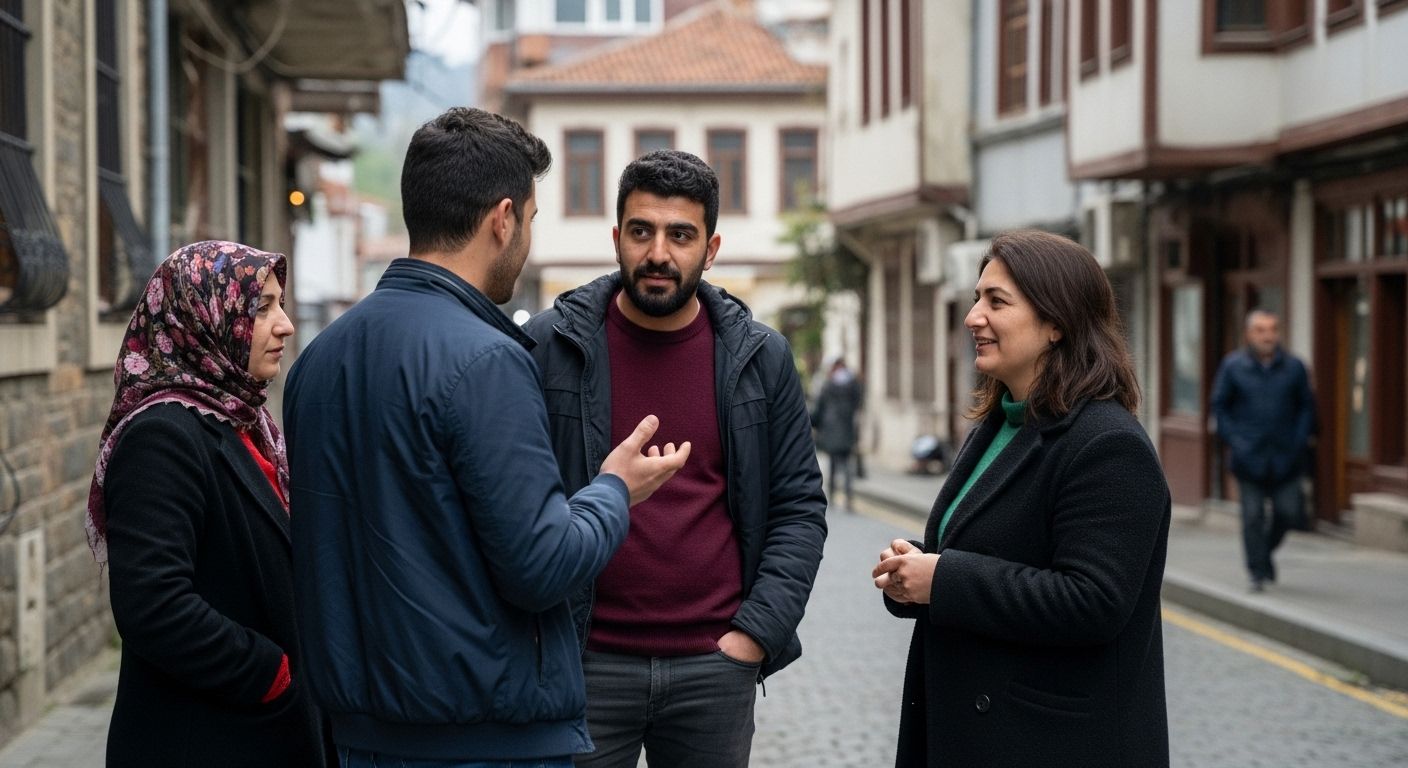
In Trabzon, terms of address used in kinship and age-related relationships quickly reveal whether someone is a familiar face or not. For example, it's common to address an older man in the neighborhood as "uncle " (emice) , even if they're not related ; this is a shortcut to both respect and closeness. Similarly, using "aunt" (teyze) for older women doesn't require kinship, softens the conversation, and reduces distance. While addressing children or younger relatives as "my boy" ( uşağum ) is more natural within the home, terms like "ula" (a more informal form of address) are more common among peers ; in other words, word choice often varies according to age and relationship level. The expression "haçan" (when) comes into play when asking about the time or emphasizing that something is delayed, and this functions more as a pattern that determines the direction of the conversation than as a form of address itself. The phrase "ha bu" ( a more informal expression) is used to indicate both following and acknowledging the other person's progress ; this usage is particularly common in family and close circle conversations. Therefore, in Trabzon, terms of address function as social signals that instantly convey not only what is being said but also the level of closeness between two people.
In Trabzon, addressing someone is not just about words, but also about tone.
In Trabzon, the primary element determining meaning in forms of address is intonation, and this is clearly evident in the use of many words specific to the dialect. Expressions like "ula , " "gidi , " " uşağum , " " hele , " "ha bu ," and "haçan ," although the same word, can take on meanings of call, warning, approval, or reproach depending on the pitch and emphasis of the voice. In particular , "ula" and "gidi," when spoken briefly and sharply, carry a warning, while when spoken softly and with a longer tone, they become a more informal address. "Hele" is used to direct the conversation or draw attention, while "ha bu" is generally spoken in a low voice, indicating that what is being said is being followed. "Haçan," on the other hand, emphasizes time rather than address and determines the direction of the conversation. This variety shows that the people of Trabzon communicate more through tone and emphasis than through words themselves.
The Connection Between Trabzon Addresses and the Black Sea Dialect and Culture

The forms of address used in Trabzon are directly related to the Black Sea dialect and regional culture. The mountainous geography, variable weather conditions, and the long-standing culture of solidarity have played a significant role in shaping the language of communication. People prefer to speak briefly but clearly, expressing their feelings without resorting to indirect methods.
The Black Sea dialect makes speech more lively and engaging. Words are shortened, emphasis is increased, and the speech takes on a rhythmic structure. This also aligns with the energetic and lively nature of the people of Trabzon. Music, the horon dance, and the communal work culture are reflections of this communication style in social life.
Trabzon's forms of address are not merely a means of communication; they are also a cultural indicator reflecting the region's identity. Through these forms of address, people connect with each other, establish levels of intimacy, and shape social relationships. For the people of Trabzon, speaking is not only a way to transmit information but also one of the most fundamental ways to build trust and closeness.
Therefore, the way people address each other in Trabzon is an important key for those who want to understand the spirit and lifestyle of the region.


Comments
Write the first comment.