

Hamsiköy rice pudding is a traditional milk-based dessert originating in Hamsiköy and five surrounding villages in the Maçka district of Trabzon, rooted in the highland culture. The region's high altitude and livestock-based lifestyle have made it possible to produce high-quality milk with a balanced fat content; this milk is boiled for a long time with rice to obtain a naturally creamy rice pudding. According to historical accounts, the mixture prepared with milk, rice, and a small amount of sugar was said to be beneficial for people suffering from stomach ailments, leading to the dessert being known as "milk medicine" among the people. This expression reflects the dessert's perception as a light and relatively easily digestible milk-based food, rather than its healing properties.
The fundamental characteristic that distinguishes Hamsiköy rice pudding from other types of rice pudding is that its consistency is achieved entirely through the natural thickening of milk and the starch of rice. In the traditional recipe, no starch or other thickening agents are used, the dessert is not baked, and the top is not burned. Serving it in earthenware pots both maintains the heat evenly and preserves the traditional presentation. The tradition of Hamsiköy rice pudding has been preserved through oral tradition, passed down from grandfather to grandson, and the production method has continued similarly for generations. This continuity has allowed Hamsiköy rice pudding to gain a distinct identity among Trabzon desserts and has laid the groundwork for it to be known as the famous Hamsiköy rice pudding.
Why is Hamsiköy Rice Pudding referred to as "Milk Medicine"?
The reason Hamsiköy rice pudding is known as a "milky medicine" is based on a folk tale; a mixture prepared with milk, rice, and a small amount of sugar is said to alleviate stomach aches, leading to its perception as a healing dessert due to its light and nutritious nature. In the cool climate of the Black Sea region and the physically demanding highland lifestyle, a relatively easily digestible and filling milky dessert has been valued as an important source of nutrition. The consistency achieved by boiling natural milk and rice for a long time without the use of starch or other thickeners distinguishes Hamsiköy rice pudding from heavy, syrup-based desserts; its protein and carbohydrate content has made it an energy-giving food that has found its place in daily life.
Which villages did Hamsiköy Rice Pudding originate from?
Hamsiköy is a settlement located in the Maçka district of Trabzon, approximately 1300 meters above sea level. The name Hamsiköy refers not to a single village, but historically to a region comprised of five villages: Çıralı, Dikkaya, Başar, Güzelyayla, and the central settlement of Hamsiköy.
The people of this region have earned their living through livestock farming for many years. The milk obtained from cattle grazing in the highlands is the most valuable product of the region. This high-quality milk forms the basis of Hamsiköy rice pudding. Milk from animals raised at high altitudes is more aromatic and has a more balanced fat content. This directly affects the taste of the dessert.
The tradition of Hamsiköy rice pudding has been shaped in these villages, passed down from grandfather to grandson. The recipe has been preserved through oral tradition rather than a written prescription. Each family has maintained its own cooking technique, but the basic ingredients and methods have remained the same. This cultural continuity has carried the dessert's identity to the present day.
The reason Hamsiköy rice pudding holds a special place among Trabzon desserts is that it belongs to a specific geographical area. Its geographical indication registration has thus protected this uniqueness.
Which villages did Hamsiköy Rice Pudding originate from?
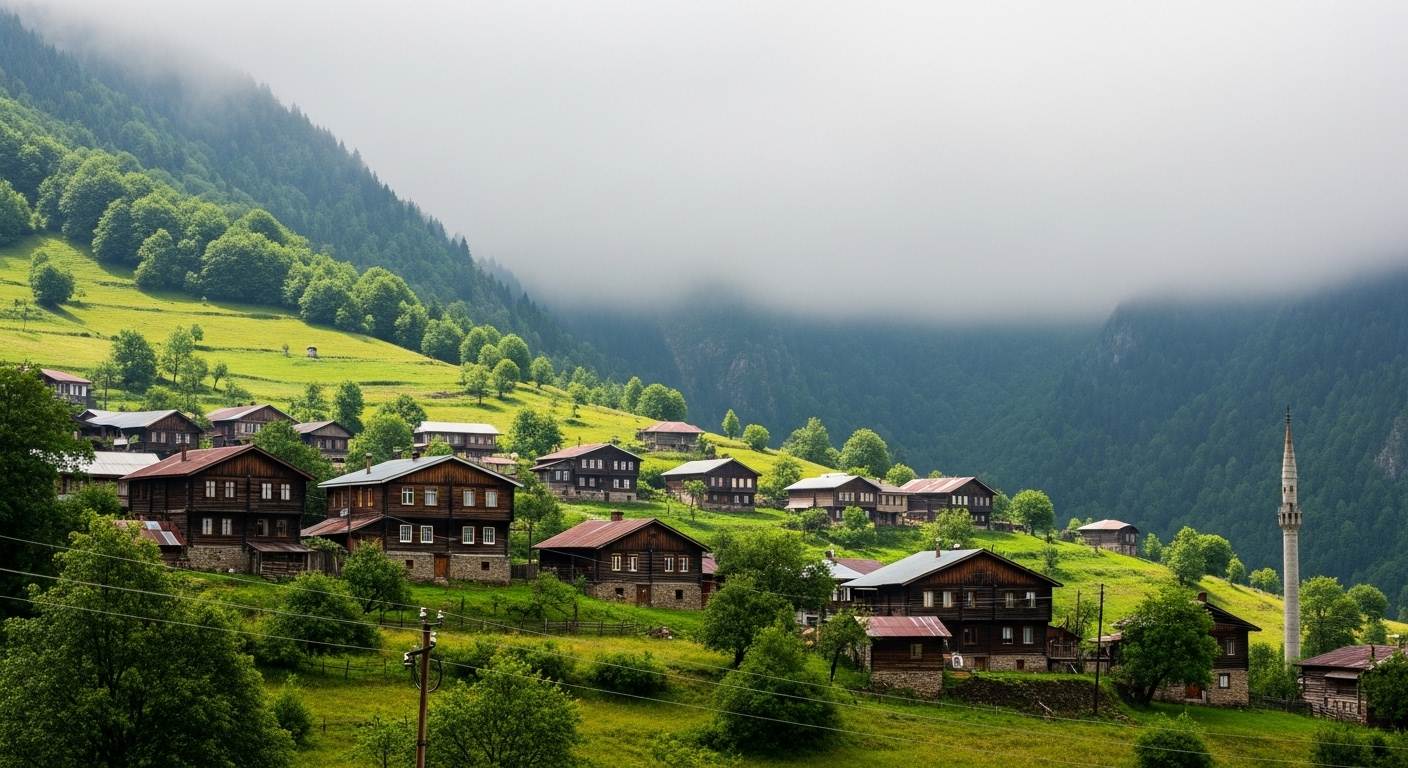
Hamsiköy rice pudding originated in Hamsiköy, a settlement in the Maçka district of Trabzon, which historically consisted of five villages: Çıralı, Dikkaya, Başar, Güzelyayla, and the central Hamsiköy settlement. The name Hamsiköy refers not to a single village, but to the geographical region formed by these settlements. The region's altitude of approximately 1200 to 1300 meters above sea level provided a favorable environment for livestock farming and enabled the production of high-quality milk. This milk formed the basis of the traditional rice pudding recipe, which is made by boiling the milk together with rice.
Increased milk production during the summer months necessitated utilizing the surplus, leading to the widespread adoption of rice pudding. The fact that the dessert is based not on a single village, but on the shared production culture of these five villages, has given the recipe a regional identity. Furthermore, Hamsiköy's location on the Zigana Pass route meant that travelers passing through the region would stop there to taste the rice pudding, contributing to the spread of its flavor to surrounding provinces. Thus, Hamsiköy rice pudding emerged under the influence of both geographical and economic conditions and has become the symbolic dessert of the region over time.
How to Make Authentic Hamsiköy Rice Pudding?
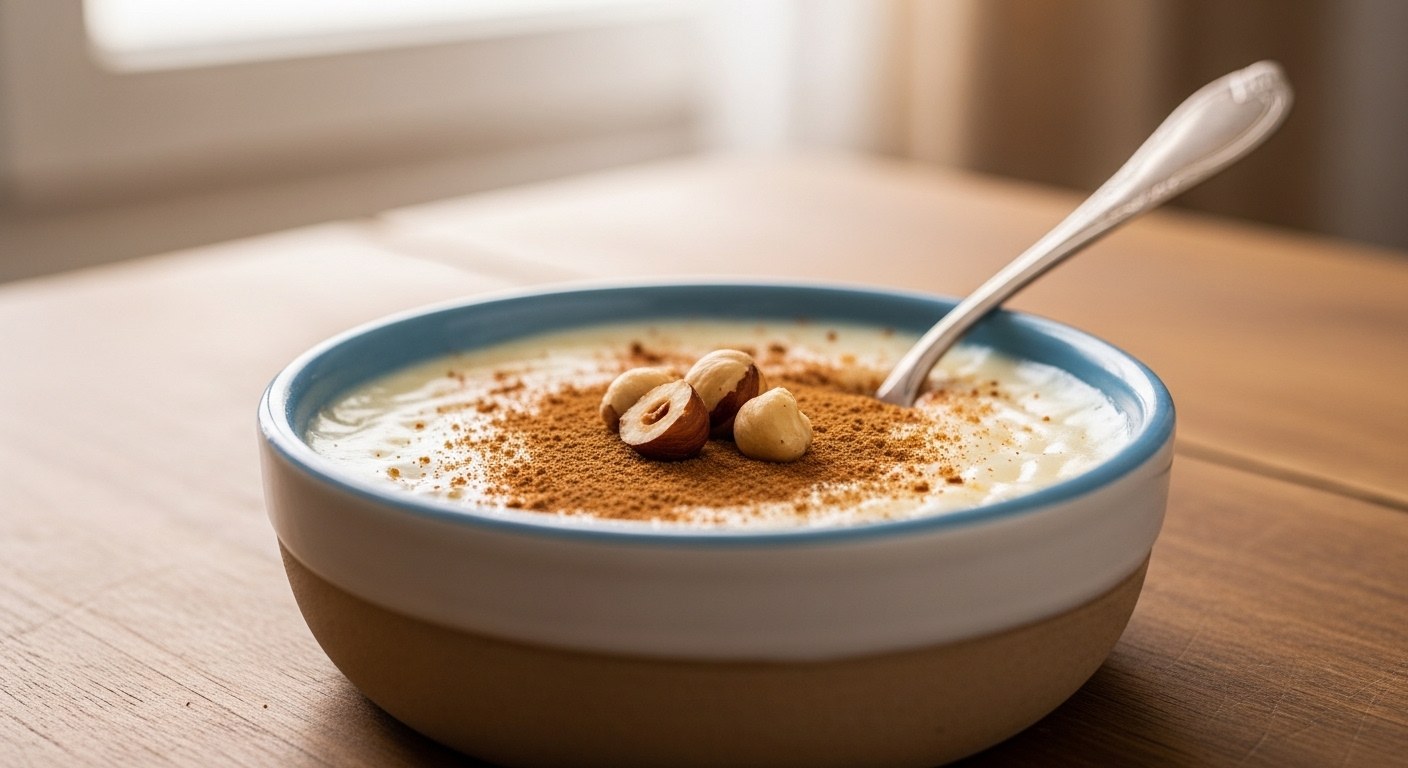
The ingredients used in making authentic Hamsiköy rice pudding are consistent and unchanging: full-fat milk, Baldo or local rice, granulated sugar, and a very small amount of salt. The traditional recipe does not use starch, flour, or any thickening agents. The consistency is achieved entirely through the natural starch of the rice and the long boiling of the milk. The difference in Hamsiköy rice pudding lies precisely in this natural thickening process.
Milk preparation: At least 2 liters of full-fat milk are placed in a wide, thick-bottomed pot. It is heated over medium heat until it reaches boiling point. The milk is constantly checked and stirred occasionally to prevent it from overflowing.
Pre-boiling the rice: Wash about half a cup of rice and boil it in a separate pot with enough water to just cover it for 5 to 7 minutes, until it is slightly al dente. It is important that the rice does not become completely mushy.
Adding the rice to the milk: The cooked rice is added to the boiling milk. After this step, the heat is reduced. The mixture should be stirred continuously and slowly to prevent it from sticking to the bottom.
Prolonged simmering and thickening: The mixture is simmered over low heat for approximately 30 to 45 minutes. During this process, the milk naturally thickens and the rice starch forms the desired consistency. At this stage, add about 1 cup of granulated sugar and a pinch of salt. If the sugar is added too early, the mixture will thicken more slowly, so it should be added after the milk has begun to thicken.
Consistency control: Authentic Hamsiköy rice pudding has a thick but fluid consistency. When scooped with a spoon, it should flow slowly, but not become watery. It's important to remember that the mixture will thicken slightly after being removed from the heat.
Dividing into earthenware bowls and resting: The prepared rice pudding is divided into earthenware bowls. It is not baked and the top is not burned. After resting at room temperature, it is left to cool.
There are some key characteristics to distinguish authentic Hamsiköy rice pudding. Its color is naturally white, without any burnt coating. It has a strong milk aroma and leaves a clean taste in the mouth. Its consistency is homogeneous, not lumpy or curdled.
It can be made at home, but the quality of the milk used directly affects the result. Natural, high-fat milk results in a more pronounced flavor. In terms of nutritional value, it's high in protein and a more balanced alternative compared to syrupy desserts. An average serving is approximately 200 to 250 calories. The Hamsiköy rice pudding tradition, passed down from grandfather to grandson, is built upon these basic steps, and the famous Hamsiköy rice pudding identity has been preserved thanks to this simple yet patient production technique.


Comments
Write the first comment.