

Trabzon music is a powerful cultural heritage shaped on the eastern coast of the Black Sea and passed down through centuries of oral tradition. Trabzon folk songs, the most important carriers of this heritage, are not merely melodic works; they are a musical expression of collective memory, historical events, and individual experiences. Examining Trabzon folk songs and their stories reveals a wealth of layered information, ranging from the region's economic structure and family relationships to migration and social conflicts. Therefore, listening to a Trabzon folk song essentially means understanding the history and emotional world of the people of the Black Sea region.
Folk songs and stories from the Trabzon region have become products of collective memory thanks to their anonymous nature. Anonymity allows an event to transcend the individual and become a social identity. This explains why folk songs have been able to survive for generations. Each work is a historical record transmitted through oral culture and, in this respect, is as valuable as written documents.
How Did Trabzon Folk Songs Originate? Historical and Cultural Background
Trabzon's historical importance as a port city has directly influenced the formation of its folk songs. Located on Black Sea trade routes, the city has been a crossroads of different cultures from the Byzantine to the Ottoman period. This cultural interaction has resulted in a rich repertoire in terms of both language and musical structure. Therefore, Trabzon music is not monolithic; it is the product of historical accumulation.
Maritime activities and long trade voyages reinforced the themes of separation and exile. Folk songs sung after young people left for Istanbul or other port cities to work are a cultural reflection of economic migration. Uncertainty, longing, and hope are simultaneously explored in these works. In this respect, Trabzon folk songs offer not only emotional but also sociological insights.
Highland culture is also a decisive element in the origin of folk songs. The practice of ascending to high-altitude plateaus during the summer months has fostered a lifestyle closely intertwined with nature. This way of life has led to the intensive use of nature descriptions in the lyrics of these folk songs. Images of fog, streams, rain, and mountains are not merely descriptions but also symbolic expressions of the human psyche.
When examining the folk songs and stories of Trabzon, it becomes clear that some works are directly based on real events. Tragedies stemming from love, family conflicts, or social tensions have, over time, been transformed into music. In this respect, folk songs possess the quality of oral history and make visible individual experiences that fall outside the official historical narrative.
What themes do folk songs and stories from the Trabzon region deal with?
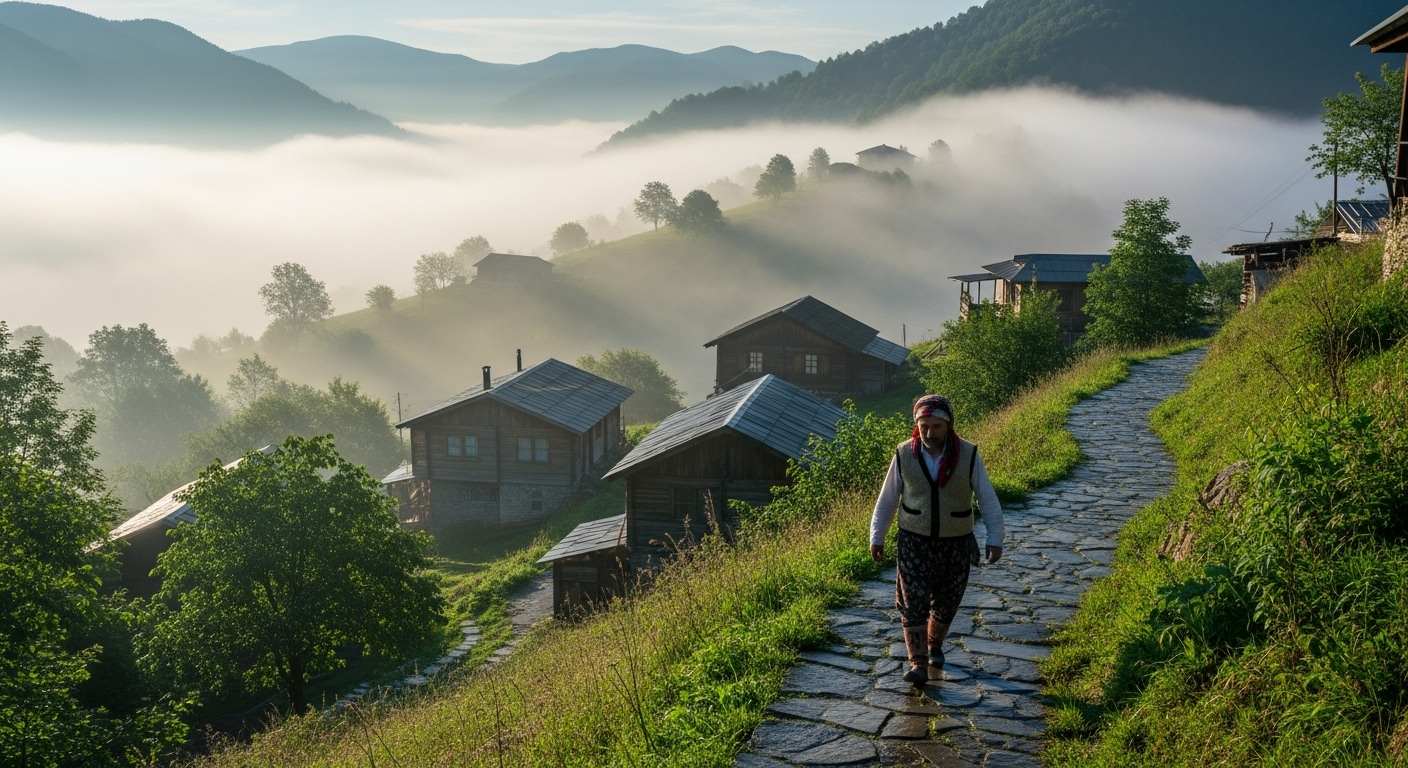
Folk songs and stories from the Trabzon region revolve around specific themes, which are directly linked to the social realities of the area. Love is one of the most dominant themes, often resulting in unrequited love. Separations due to family pressure or economic necessities create a dramatic structure in the lyrics of these songs. These narratives provide insight into the understanding of marriage and social norms of the time.
The theme of exile became particularly prominent in the 19th and 20th centuries. Songs sung after young people left for work in big cities express their longing for their homeland with powerful imagery. In Trabzon folk songs with this theme, the homeland is not merely a geographical location; it is a symbol of identity and belonging.
Social events have also been the subject of folk songs. Local tales of heroism, tragic deaths, or injustices have, over time, become anonymous and part of the collective memory. These works offer clues about the people's understanding of justice and their value system.
The depiction of nature occupies a central position in Trabzon folk songs. The harsh climate and rugged geography of the Black Sea region are identified with human character. Nature is used as a mirror of the human soul, and this symbolic expression enhances the aesthetic power of the songs.
The Trabzon Atma Folk Song Tradition and the Power of Oral Culture
The Trabzon "atma türkü" tradition is one of the most dynamic aspects of the region's oral culture. Atma türkü is a musical form that requires spontaneous creation and is sung through reciprocal improvisation. This tradition is particularly prevalent at weddings and highland festivals. The improvisational nature reveals the singer's cultural background and command of the language.
Trabzon's impromptu folk song lyrics often contain humorous elements, but beneath this humor lies social observation and criticism. During these impromptu duels, social status, intelligence, and quick wit are highlighted. This tradition keeps oral culture alive and contributes to the preservation of local dialect characteristics.
The "atma türkü" (improvised folk song) tradition is not merely a means of entertainment; it is also a method of social communication. The boundaries of social norms become visible during these impromptu performances. Therefore, Trabzon folk songs should be considered a historical continuation of the "atma türkü" tradition.
The Music of Trabzon Folk Songs: Kemençe, Horon, and Rhythmic Structure
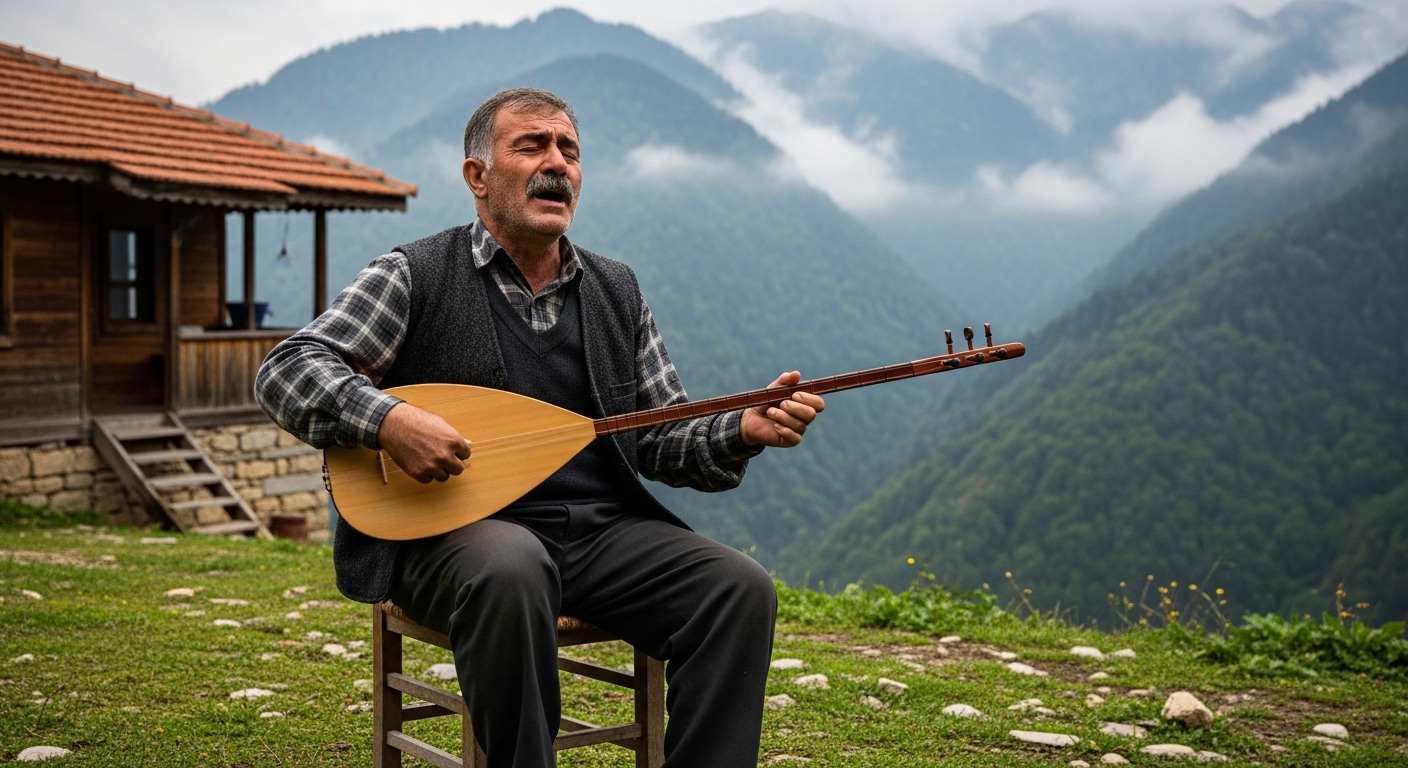
When Trabzon music is mentioned, the first instrument that comes to mind is the kemençe (a type of stringed instrument). The Black Sea kemençe, with its high-frequency and vibrating sound, defines the character of the region's music. This instrument is used in the performance of both fast-paced and emotional melodies.
The rhythmic structure is generally lively, with 7- and 9-beat measures being common. This rhythm is directly linked to the horon dance. Horon is not just a dance; it is a cultural practice representing social unity and solidarity. Therefore, most folk songs from Trabzon were composed to be performed with dance accompaniment.
The fast tempo is related to the lifestyle of the people of the Black Sea region. Harsh natural conditions and a vibrant social structure have given the music dynamism. However, laments tend to have a slower tempo, with the emotional intensity of the lyrics taking center stage. This diversity creates a rich repertoire in terms of Trabzon folk songs and stories.
Today, thanks to digital platforms, Trabzon folk songs reach a wider audience, but the traditional performance style still holds great importance in terms of cultural transmission. Live kemençe performance and collective horon dance practice are cultural spaces where identity awareness is reinforced.
Trabzon folk songs are a powerful cultural bridge between the past and the present. When examining the folk songs and stories from the Trabzon region, it becomes clear that each work has a specific historical context and social reality behind it. These works continue to live on as voices preserved in the memory of the Black Sea.


Comments
Write the first comment.