

Among the historical structures that shape Trabzon's urban identity, the Zağnos Bridge holds a special place. This bridge is not merely a crossing point; it is also a living historical document that carries Trabzon's multifaceted past to the present. Having undergone various repairs throughout the period from Roman to Ottoman times, the bridge has played a decisive role both in terms of Trabzon's history and the city's spatial development. Today, located in the Zağnos Valley in Trabzon, this structure is one of the most frequently visited points by both domestic and foreign visitors thanks to its proximity to the city center.
Understanding the Zağnos Bridge means understanding Trabzon's political, military, and commercial history. Especially after the conquest of Trabzon, the area where this bridge is located gained strategic importance in the city's integration into the Ottoman administrative system. Therefore, the bridge should be considered not only as an architectural work but also as part of Trabzon's historical transformation.
Where is the Zağnos Bridge? Its location is within the Zağnos Valley in Trabzon.
The Zağnos Bridge is located in the Ortahisar district of Trabzon, spanning the Zağnos Valley. The bridge connects Ortahisar with the Gülbahar Hatun neighborhood and has historically served as an important crossing point for internal city transportation. The natural formation of the valley divides the city into two deep gorges from north to south. This geographical feature has been a determining factor in defense and settlement planning throughout history.
A study of Trabzon's history reveals that the Zağnos Valley was a critical area for both defense and trade. Particularly during the Middle Ages, this region, connected to Trabzon's city walls and fortress system, played a strategic role in protecting the city. Following the conquest of Trabzon in 1461, the Ottoman administration strengthened its control over this valley while reorganizing the city's administration and military structure. The bridge was actively used during this period for both military movements and intra-city transportation.
Today, Trabzon's Zağnos Valley is one of the city's breathing spaces, with its landscaped walking paths, parks, and social areas. Access to the bridge is quite easy; it's a short walk from Trabzon city center or easily accessible by public transport. This advantageous location makes the Zağnos Bridge attractive to both history buffs and everyday visitors.
When was the Zağnos Bridge in Trabzon built?
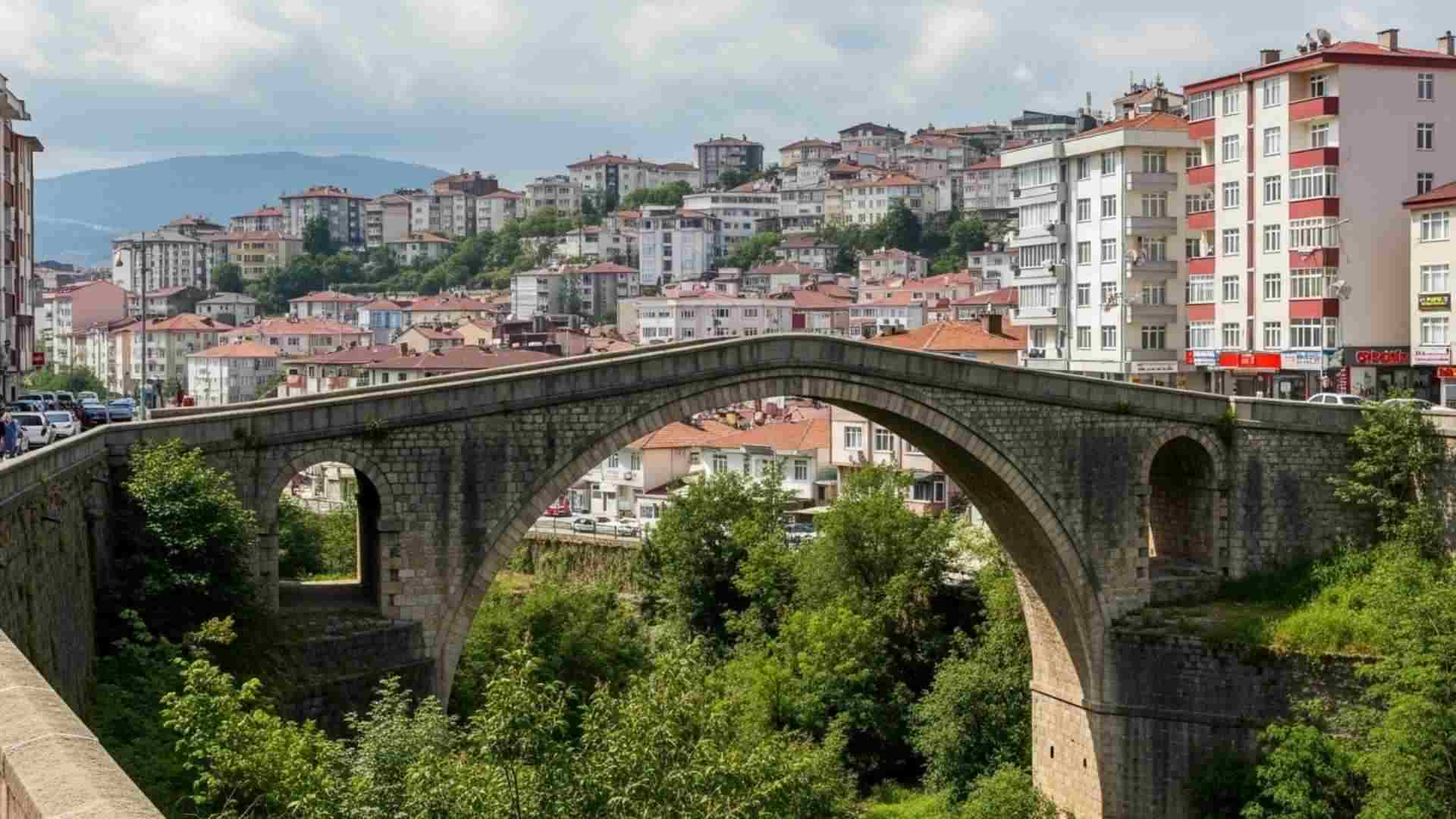
There are differing opinions regarding the exact construction date of the Zağnos Bridge. The generally accepted view is that the bridge's foundations date back to the Roman period. The large stone blocks and arch system visible in the lower parts of the structure bear the hallmarks of Roman engineering. However, the bridge largely acquired its present form during the Ottoman period.
In the 15th century, during the reconstruction process initiated in the city after Sultan Mehmed the Conqueror's conquest of Trabzon, the bridge underwent significant repair and renovation. According to sources, the bridge was renovated and widened by Zağnos Mehmet Pasha. For this reason, the structure is sometimes referred to as the Zağnos Pasha Bridge. This intervention during the Ottoman period ensured that the bridge became a permanent stone structure.
Throughout its history, the bridge in Trabzon has undergone restoration in various periods. Repairs made in the 19th century and renovations during the Republican era contributed to its survival to the present day. The structure seen today is considered to be a combination of Byzantine and Ottoman interventions built upon a Roman-based infrastructure.
What was the role of the Zağnos Bridge during the Roman, Byzantine, and Ottoman periods?
The Zağnos Bridge is an example of a structure reflecting the urban planning approaches of different civilizations. Built during the Roman period, the bridge served to ensure the continuity of military and trade routes. In Roman engineering, arched stone bridges were preferred for their durability and longevity. This understanding is clearly visible in the basic structure of the Zağnos Bridge.
During the Byzantine period, Trabzon became a regional trade center. In this era, the bridge served as a crucial crossing point, strengthening the connection between the port and the interior. It also contributed to the city's defense by being integrated with the city walls.
During the Ottoman period, the bridge became part of the administrative structure after the conquest of Trabzon. Transportation networks held central importance in Ottoman urban planning. Strengthening and widening the bridge was deemed necessary for both military mobility and civilian life. Thus, the Zağnos Bridge became one of the rare examples that combined traces of three great civilizations in a single structure.
What are the architectural features of the Zağnos Bridge?
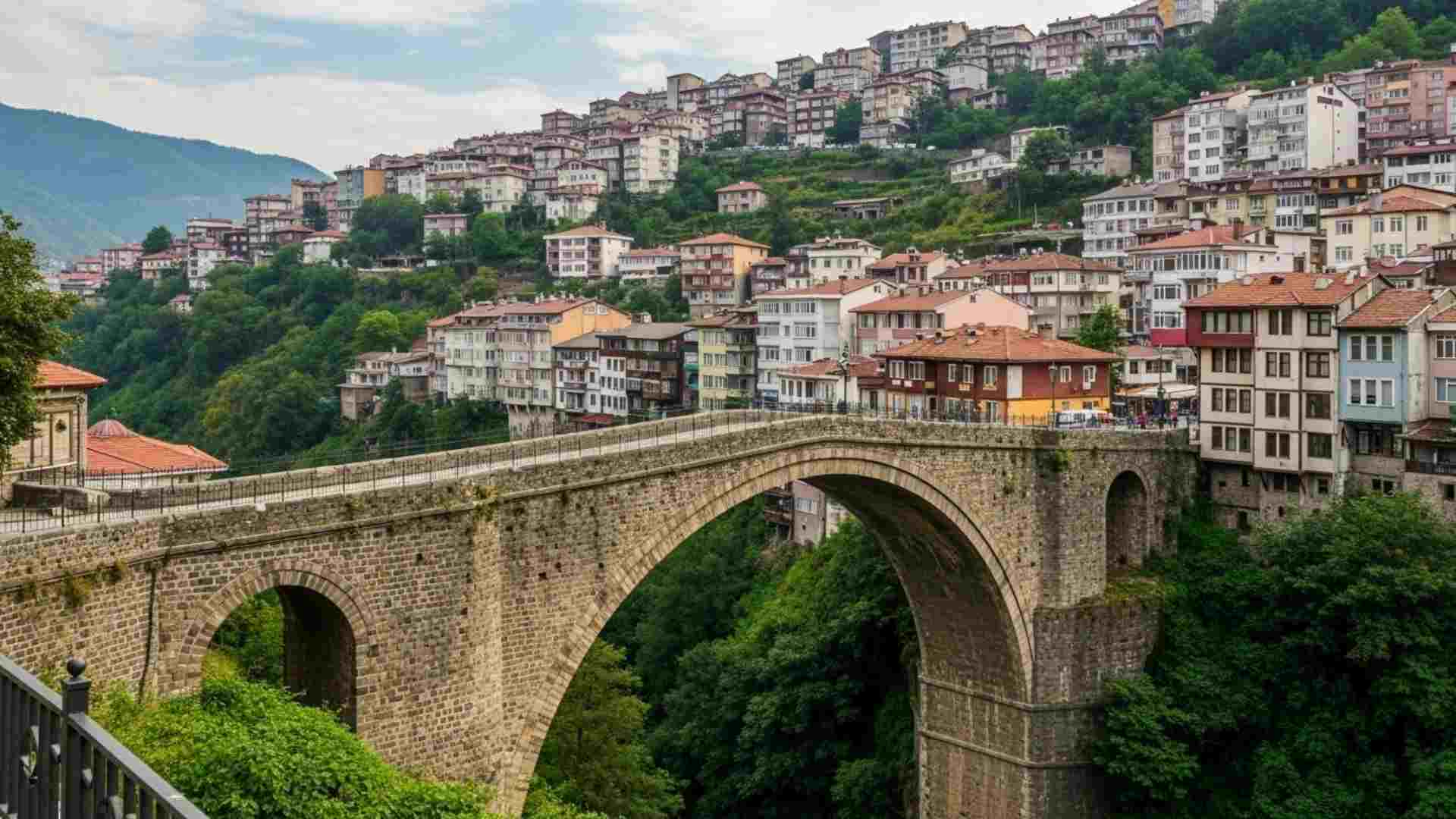
The Zağnos Bridge was constructed using cut stone. With its rounded arch form, the structure exhibits the typical characteristics of classical stone bridge architecture. Currently appearing as a two-arched bridge, it displays traces of different periods due to additions and repairs made in the past.
The bridge's length varies between approximately 50 and 60 meters, while its width averages around 7 meters. These dimensions indicate a design suitable for both pedestrian and vehicular traffic. The arch spans are designed to provide a balanced distribution of the load.
The large blocks of stone seen in the lower section of the structure exhibit characteristics that may date back to the Roman period, while the arrangements in the upper sections indicate Ottoman intervention. Although the bridge railings do not fully retain their original form today, the main body structure is largely original. This makes the Zağnos Bridge valuable both architecturally and archaeologically.
The Importance of Zağnos Valley within the Trabzon Valley
The term "Trabzon Valley" is important for understanding the topographical structure of the city. Trabzon has a terraced settlement structure rising between the sea and the mountains. One of the most important natural elements shaping this structure is the valleys. The Zağnos Valley is one of the most prominent natural formations dividing the city center in a north-south direction.
The importance of the Zağnos Valley is not only geographical. Throughout history, this valley has been used as a defensive line and a boundary for settlements. In the history of Trabzon, castle systems and fortifications were located on both sides of this valley. Therefore, the bridge connects not only two neighborhoods but also two different historical fabrics.
Today, the Zağnos Valley has become one of the centers of social life with its landscaped areas. Thanks to its walking paths, resting areas, and event spaces, it is an attractive place for both locals and tourists. This transformation is a successful example of how historical structures can be preserved while being integrated with modern life.
When the Zağnos Bridge and Zağnos Valley are considered together, one of the strongest symbols of Trabzon, bridging the city's past and present, emerges. This structure represents the continuity stretching from Roman to Ottoman times, while also continuing to contribute to the urban aesthetics of modern Trabzon.


Comments
Write the first comment.