

Kuymak is a traditional dish originating from the rural culinary culture of the Black Sea region, based on corn flour and dairy products. Widely consumed, particularly in and around Trabzon, kuymak has historically been an important food source for communities engaged in agriculture and animal husbandry due to its high energy value. The characteristic texture of the dish is created by the separation of butter from the mixture during cooking and the cheese acquiring an elastic texture. To achieve this texture, the cheese used for kuymak must have a high fat content and stretchable properties, unlike ordinary cheeses.
The traditional kuymak recipe is shaped by regional production habits and local ingredients. The way the corn flour is milled, the source of the butter, and the freshness of the cheese directly affect the final texture of the dish. Although kuymak is prepared with seemingly simple ingredients, it is a dish that requires culinary practice due to the techniques applied during the cooking process. In this respect, kuymak is considered not only a flavor element but also a product of culinary knowledge passed down in Black Sea cuisine.
What is Kuymak, and Why is Trabzon-Style Kuymak Different?
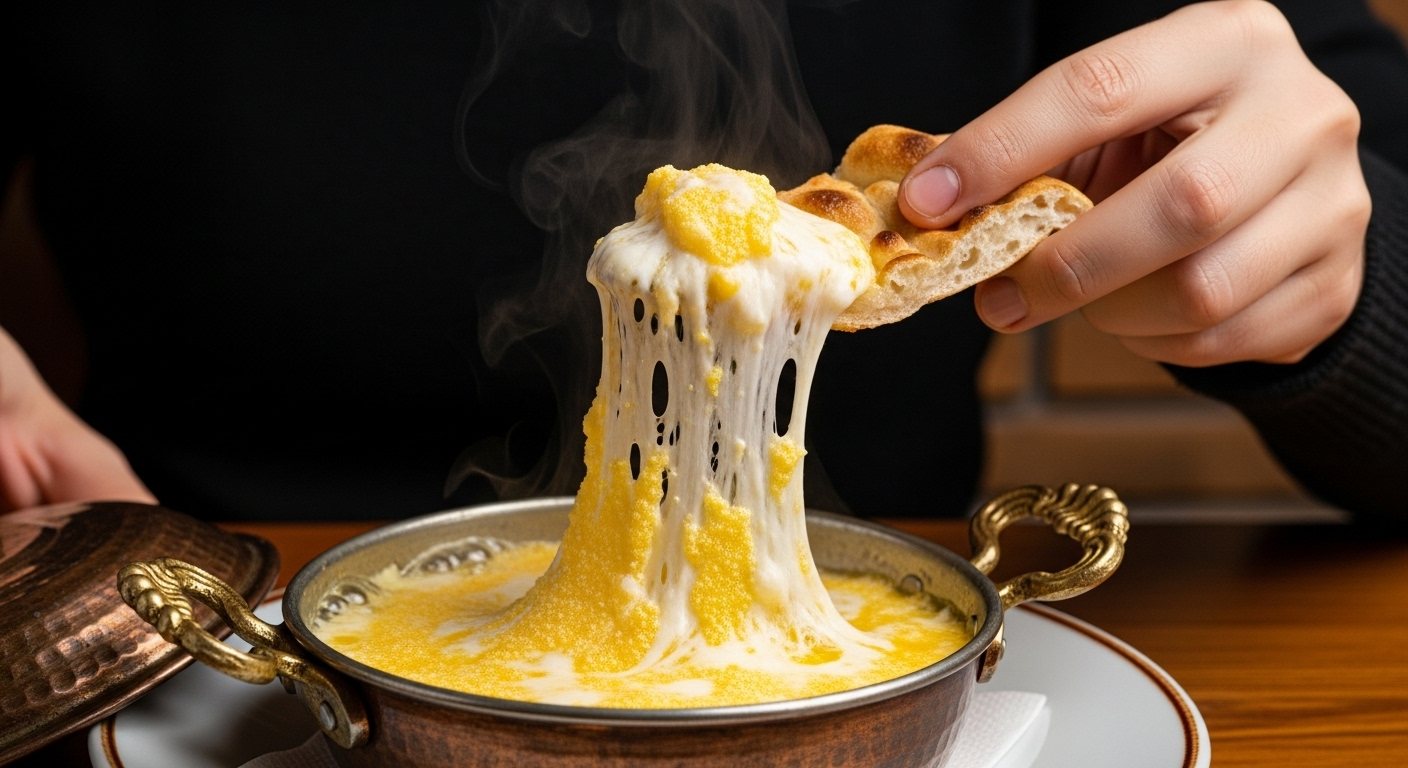
Kuymak is a traditional Black Sea dish primarily made with corn flour, butter, and cheese. However, Trabzon-style kuymak differs distinctly from those made in other regions due to the region's climate, livestock farming culture, and local production practices. The corn flour used in Trabzon is finer, the butter is more aromatic, and the cheese is richer in fat. The combination of these three elements results in a flavor that is much more intense and characteristic than classic recipes.
In Trabzon-style kuymak, consistency is the most crucial element. The cheese stretches when scooped with a spoon, the butter rises to the surface, and the bottom of the pan is slightly sticky. This texture is achieved not only with the right ingredients but also with the right amount of patience during cooking. Therefore, the Trabzon-style kuymak recipe is not a dish to be prepared quickly; it is a traditional culinary practice requiring care.
What are the differences between kuymak and muhlama?
Although kuymak and muhlama are often mistaken for the same dish, they have significant differences in terms of technique and taste. Muhlama has a more fluid consistency, while kuymak is denser, thicker, and has a firmer texture. The main reason for this difference is the type of cheese used and the proportion of corn flour. In kuymak, the corn flour creates a more pronounced texture, while the proportion of flour is lower in muhlama.
Another difference is the cooking time. Kuymak is cooked over low heat for a longer period, during which time the butter is allowed to separate. Muhlama, on the other hand, aims to be served more quickly. Also, the cheese used in kuymak must be kuymak-specific cheese; it should have stretchy properties. This detail is one of the clearest differences between the two dishes.
What is Muhlama Cheese, and is it the same as Kuymak Cheese?
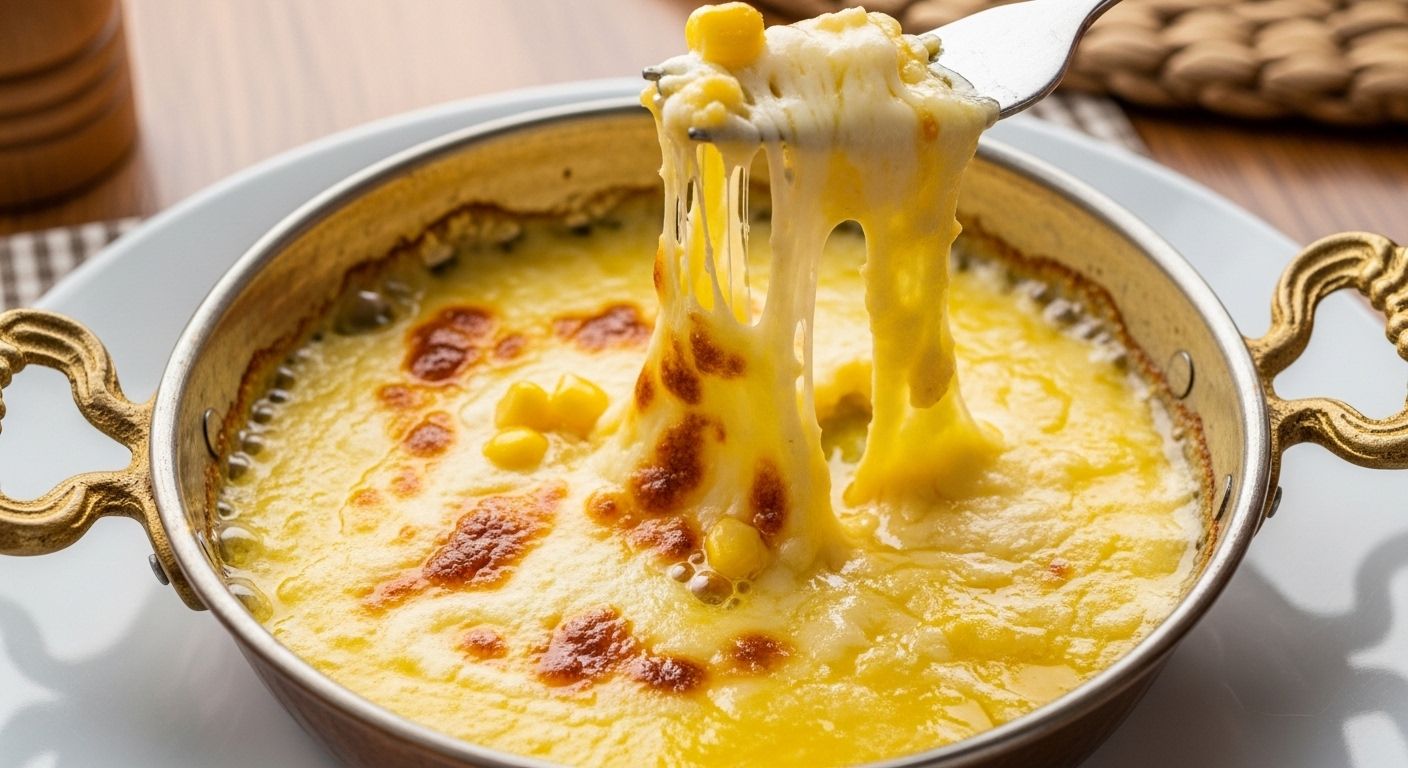
The cheese used in making muhlama must have different characteristics than ordinary melting cheeses. Cheeses known as muhlama cheese are those with a high fat content, that do not harden when exposed to heat, and that have a stretchy texture. These characteristics are what create muhlama's characteristic texture.
Kuymak cheese and muhlama cheese often belong to the same cheese group. The most common example is Kolot cheese. However, in kuymak, the cheese is expected to have a more pronounced stretchiness and release more fat. In muhlama, the cheese should melt more smoothly to support the dish's fluid texture. Therefore, while any kuymak cheese is suitable for muhlama, not every muhlama cheese will yield the desired result in kuymak.
Why is the Muhlama Pan Important?
The pan used in making muhlama directly affects the consistency and cooking balance of the dish. Traditionally, copper or thick-bottomed pans are preferred. These types of pans distribute heat evenly, allowing the corn flour and butter to cook in a controlled manner. Thin-bottomed pans, on the other hand, can cause a sudden increase in heat, leading to the flour burning.
The width of the pan surface is also important for the even cooking of the muhlama. Narrow and deep pans can cause the bottom of the mixture to cook too quickly while the top doesn't heat up sufficiently. Using the right pan ensures that the muhlama has a smooth and even texture.
Can Muhlama be made with white flour?
Technically, a dish similar to muhlama can be made using white flour; however, this is considered outside the traditional muhlama recipe. White flour has a different starch structure compared to corn flour and binds more quickly during cooking. This alters the characteristic texture and aroma of muhlama.
Mixtures made with white flour create a denser, thicker consistency. Therefore, the resulting dish is considered a different type of flour dish rather than the muhlama known in Black Sea cuisine. To achieve the traditional muhlama flavor, the use of corn flour is considered a fundamental requirement.
How to Choose the Right Ingredients for Authentic Trabzon-Style Kuymak?
In making authentic kuymak, the choice of ingredients directly affects the success of the recipe. First and foremost, the corn flour must be fresh. Finely ground corn flour, preferably stone-milled, provides a smooth texture to the kuymak. If coarse-grained or stale corn flour is used, the kuymak will clump and leave an unpleasant taste in the mouth.
Choosing the right cheese is the most critical point in the recipe. Not every cheese that melts is suitable for kuymak. Kuymak cheese should have a high fat content, be easily stretched, and not harden during cooking. In Trabzon, the most preferred cheese is Kolot cheese. The butter must be natural and unsalted. Using artificial fats or margarine completely spoils the taste of kuymak.
Steps and Cooking Technique for Trabzon-Style Kuymak
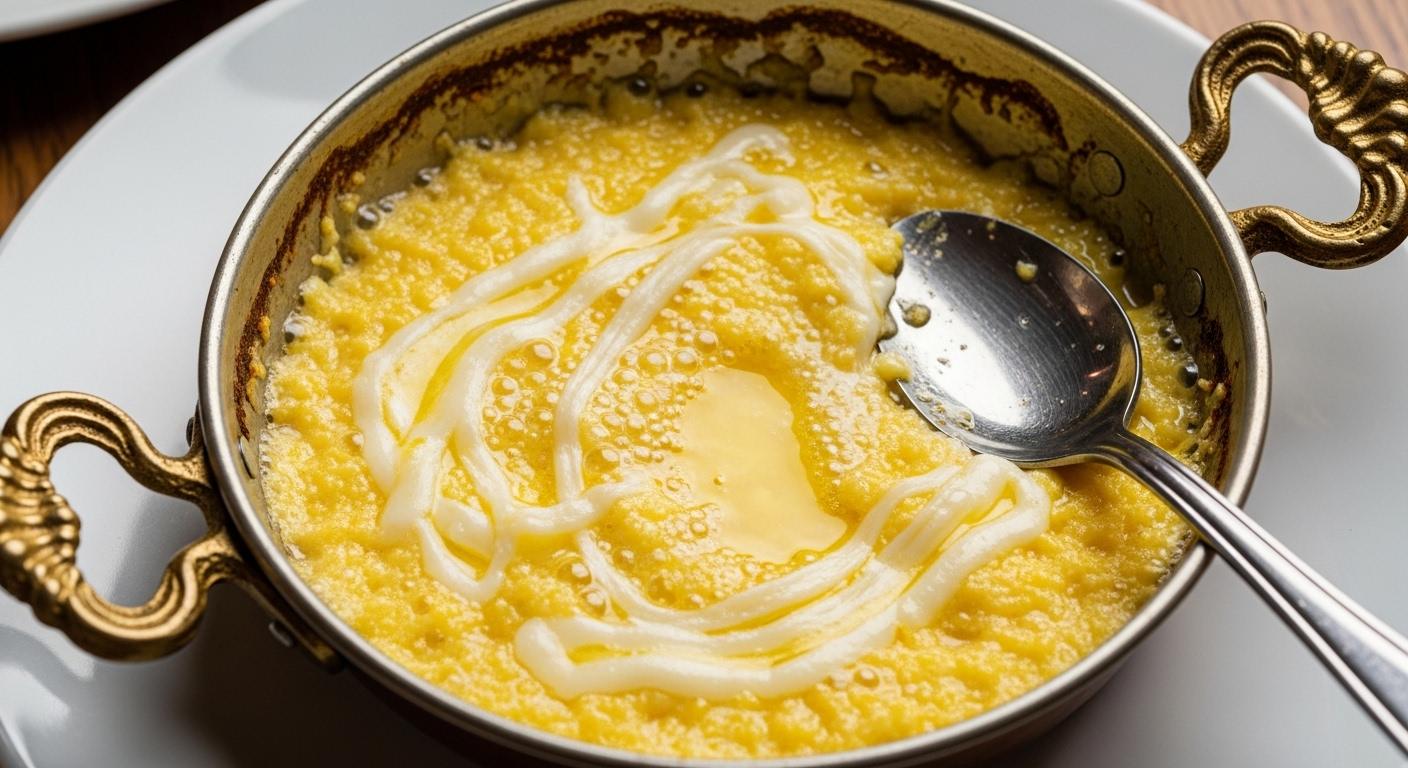
The first step is choosing the right pan. For Trabzon-style kuymak, copper or thick-bottomed pans are preferred; these pans distribute heat evenly, allowing the corn flour to roast in a controlled manner. When butter is added to the pan, the heat should be kept low to prevent it from burning. The butter needs to melt completely so that the milk particles begin to separate; this stage forms the basis of the fatty texture that will develop in the kuymak.
Next, cornmeal is added, and the roasting process begins. After adding the cornmeal to the butter, it must be roasted patiently. The most important technical point here is to allow only its aromatic scent to emerge, without letting the cornmeal darken in color. High heat will cause the flour to burn and result in a bitter taste in the kuymak. Therefore, it is necessary to stir slowly and controllably throughout the roasting process.
In the next stage, hot water is added in a controlled manner. Using hot water prevents the mixture from curdling and clumping suddenly. Stirring should continue while adding water until the mixture becomes smooth. As the mixture thickens, the starch in the cornmeal is released, and the kuymak begins to take on its characteristic dense texture. At this point, adjusting the amount of water carefully is critical for achieving the correct consistency.
In the final stage, cheese is added and cooking is complete. After adding the cheese, the heat is reduced significantly and the frequency of stirring is decreased. This technique allows the cheese to melt and stretch, and the butter to separate from the mixture and rise to the surface. The butter rising to the surface and the cheese acquiring an elastic texture indicates that the cooking process has been completed correctly for the kuymak recipe. At this stage, the kuymak is cooked on its own for a few more minutes until it reaches its ideal consistency.
How many servings does this Muhlama recipe make? Balanced portion sizes according to serving size.
When making muhlama and kuymak, the balance of ingredients is crucial when adjusting the measurements according to the portion size. For a kuymak recipe for two people , approximately 2 tablespoons of corn flour, 2 tablespoons of butter, 1 cup of hot water, and 100-120 grams of kuymak cheese are used; this measurement ensures the right consistency. For a kuymak recipe for three people , the corn flour is increased to 3 tablespoons, the butter is also increased to 3 tablespoons, the hot water is approximately 1.5 cups, and the cheese is kept between 150-180 grams. For a kuymak recipe for four people , 4 tablespoons of corn flour, 4 tablespoons of butter, approximately 2 cups of hot water, and 220-250 grams of kuymak cheese provide the ideal balance. As the portion size increases, the water should be added gradually rather than all at once, the heat should be reduced after adding the cheese, and stirring should be minimized; this ensures that the kuymak stretches and the butter rises to the surface, even in larger quantities.
The Most Common Mistakes When Making Kuymak and the Details That Affect Its Consistency

The most common mistake in making kuymak is using high heat. High heat causes the corn flour to burn and the cheese to become hard and rubbery. Another mistake is adding the water all at once. If the water is not added in a controlled manner, the consistency will not be right and the mixture will become unbalanced.
Another important factor affecting the consistency is the frequency of stirring. Continuous stirring prevents the butter from separating. After a certain point, kuymak should be left to cook on its own. Impatience at this stage will reduce the success of the recipe. The authentic kuymak recipe is prepared by paying attention to these fine details.
How to Serve Kuymak?
Kuymak should be served immediately after cooking. As it cools, it loses its elasticity and its consistency hardens. Traditionally, it is served in a copper pan, with the center slightly opened. Serving it with cornbread and tea is an indispensable part of Trabzon cuisine.
Kuymak is not stirred during serving; it is scooped from the side with a spoon. This method allows the cheese to stretch and the butter to be visible. Kuymak is a dish that is eaten by sharing and complemented by conversation.
The Importance of the Bottom in Authentic Kuymak
In authentic kuymak, the bottom sticking to the bottom is one of the most important indicators that the dish is cooked correctly. This doesn't mean the bottom is burnt, but rather that it's browning in a controlled manner. The formation of a crust indicates that the butter has separated sufficiently and the kuymak has reached the desired consistency.
This layer is the most enjoyable part of eating kuymak for many people. To allow the bottom to form properly, the cooking time shouldn't be rushed. Kuymak cooked patiently reflects the authentic Trabzon style in both flavor and texture.
Which region does Muhlama originate from, and what is it called in the Black Sea region?
Muhlama originates from the Eastern Black Sea region and is particularly common around Trabzon, Rize, and Artvin. Both the name and the techniques used may vary slightly from region to region. In Trabzon, the name "kuymak" is more commonly used, while in Rize and its surroundings, the term "muhlama" is more frequently employed.
This difference in name doesn't mean the recipe has changed completely. However, the type of cheese used, the proportion of cornmeal, and the cooking time vary according to regional customs. Such variations in naming are quite common in Black Sea cuisine, and the fact that the same dish is known by different names in different regions is considered a cultural richness.


Comments
Write the first comment.